When the teacher handed out all the new books - there was the flying shark, just like in the catalogue, all shiny and new. I'd never been so excited about a book in my life, and I read every single word. I'm sure that book turned me into a reader...and I hope that some of the students at Willmot are turned into readers after their experience today. http://www.booksinhomesaustralia.com.au/
Sunday, March 27, 2011
Books In Homes
Today I was honoured to be invited to speak at Willmot Primary School, as a Role Model for the Books In Homes Project. Every student was presented with three new books at a book-giving ceremony (with thanks to sponsorship from a local club). It is hoped the new books will encourage reading and literacy. The day bought back memories of my very first new book. I was in Year 4 at school and the teacher handed out a Book Club brochure. You could choose any book and it would be delivered to school. Was I excited? You bet I was excited! I begged my parents to buy me a book…believe me...it took a while to talk them around, but eventually they said yes. So I finally chose a book called The Shark in Charlie's Window, and I chose it because of the flying shark on the cover. When the teacher handed out all the new books - there was the flying shark, just like in the catalogue, all shiny and new. I'd never been so excited about a book in my life, and I read every single word. I'm sure that book turned me into a reader...and I hope that some of the students at Willmot are turned into readers after their experience today. http://www.booksinhomesaustralia.com.au/
When the teacher handed out all the new books - there was the flying shark, just like in the catalogue, all shiny and new. I'd never been so excited about a book in my life, and I read every single word. I'm sure that book turned me into a reader...and I hope that some of the students at Willmot are turned into readers after their experience today. http://www.booksinhomesaustralia.com.au/

Thursday, March 3, 2011
The Mystery of Writing
I wanted to share something about writing - and I hope it makes sense to those who aren't writers. I'm in the middle of reading a book on the writing craft, Escaping into the Open - the Art of Writing True, by Elizabeth Berg. There's a small section on 'plot' which is explained so perfectly I'll quote it now.
"There are two kinds of writers, those who start with a plot and those who end up with one. I am one of the latter." Elizabeth also says, "When I start a novel, I start with a feeling. It's a strong feeling, but that's all it is. There's something I very much want to say and/or understand, and I need a novel to help me do it."
Well, today I had the kind of feeling that Elizabeth refers to in her book. There is something I feel that is worthy of saying - it's hazy - but it's there, and the only way I can explain it is to put words on paper. I can almost see the outline of the character who might show me how to say what I feel. She's very hazy too, but she's lurking in a corner of my mind...perhaps waiting for her chance to 'escape into the open.'

"There are two kinds of writers, those who start with a plot and those who end up with one. I am one of the latter." Elizabeth also says, "When I start a novel, I start with a feeling. It's a strong feeling, but that's all it is. There's something I very much want to say and/or understand, and I need a novel to help me do it."
Well, today I had the kind of feeling that Elizabeth refers to in her book. There is something I feel that is worthy of saying - it's hazy - but it's there, and the only way I can explain it is to put words on paper. I can almost see the outline of the character who might show me how to say what I feel. She's very hazy too, but she's lurking in a corner of my mind...perhaps waiting for her chance to 'escape into the open.'
Thursday, February 24, 2011
Marvelous Magazines

The first thing I ever had published was a non-fiction piece in a magazine. I still remember when the editor phoned me - I was cooking sausages on the barbeque and was so stunned I could barely utter a sensible word. Now, as well as writing books, I still contribute regularly to several children's magazines. You can find some of my recent stories and articles in Comet, Blast Off, and Touchdown Magazines, and also The School Journal (New Zealand).
- Camels in the Outback, The School Magazine, Blast Off, Australia (Issue 2/11)
- You Light Up My Life, Comet Magazine, Pearson Education, Australia (Issue 1/11)
- Earth Hour, Comet Magazine, Pearson Education, Australia (Issue 1/11)
- Nora (short story) The School Magazine, Touchdown, Australia, Issue 1/1
- Old Sandshoe (short story) School Journal, New Zealand, Part 1/1
I was honoured to have my short story Nora illustrated by the very talented Kim Gamble - illustrator of the Tashi series.
Wednesday, February 16, 2011
Writing Tip # 3 - How to Hook Your Readers

One of the tricks writers use to hook their readers, is to write a fantastic first paragraph. The challenge is to make the paragraph so good, the reader can’t put the book down. Sometimes the author does this by introducing one or more characters and a mystery. Take a look at these great first paragraphs.
1. “Angela Throgmorton lived alone and liked it that way. One day while doing some light dusting, she heard a knock at the door.
There, on her front step, was a baby monster.”
Old Tom, by Leigh Hobbs
2. “Where’s Papa going with that axe?” said Fern to her mother as they were setting the table for breakfast.
“Out to the hoghouse,” replied Mrs Arable. “Some pigs were born last night.”
Charlotte’s Web, by E.B. White
3. “Once I was living in an orphanage in the mountains and I shouldn’t have been and I almost caused a riot.
It was because of the carrot.”
Once, by Morris Gleitzman
4. “If you are interested in stories with happy endings, you would be better off reading some other book. In this book, not only is there no happy ending, there is no happy beginning and very few happy things in the middle. This is because not very many happy things happened in the lives of the three Baudelaire youngsters.”
A Series of Unfortunate Events, by Lemony Snicket
In each of the above paragraphs we meet some characters and we’re forced to wonder – What will happen next?
1. Who is the baby monster and where did it come from?
2. What is Papa going to do with that axe?
3. Why was the character in the orphanage and how did they cause a riot with a carrot?
4. Who are the Baudelaire youngsters and why were their lives so unhappy
I know I'd want to read more to find out the answers.
Thursday, February 3, 2011
NSW Premier's Reading Challenge
This year, I'm thrilled to have three of my books listed on the NSW Premier's Reading Challenge.


Sunday, January 23, 2011
From the Writer's Desk - Writing Tips for Kids
Currently, I'm guest editor for BOOK BEAT - a Children's Book Council newsletter. Often I'll include a writing tip or exercise in BOOK BEAT, so I thought I'd post a collection of them here. I hope to add more in the coming months.
Tip # 1: Improve your writing with word pictures
Sometimes when we’re reading a book, it’s almost as if we’re watching a movie. The author uses words that help us to see the story. Try reading this extract from Deb Abela’s latest book Grimsden, and you’ll understand.
“Sneddon looked into a small, rounded mirror and ran his hands along either side of his hair, sweeping it upwards into a smooth, wave-like quiff.”
Did you see Sneddon fussing with his hair? Descriptions or ‘word pictures’ like this make reading fun. They help us to create pictures in our minds so that we become involved in the story.
Activity: Find an interesting picture of a person in a magazine and write a description of that person using word pictures.
Tip # 2: Taking a Look at Dialogue
What is dialogue? If you open any novel, you’ll find it. It’s the parts of the story where the characters speak to each other, and it looks like this:
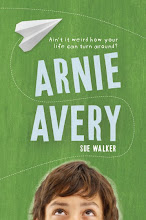
“I mean it, Arnie. You need some sparring practice,” said Belly. He nodded fast. “I can teach you.”
Now it was my turn to laugh. “What? You?”
“Yeah, me. Dad used to be a boxer, you know.”
Dialogue helps to make our stories interesting, but it should give us new information and move the story forward. It should draw us in and help us get to know the characters. Here are some tips to improve your dialogue:
1. Listen to people talking. Dialogue is a cut down version of real conversation – just the interesting bits.
2. Read your dialogue out loud to see how it sounds. Would real people speak that way?
3. Try to break up your dialogue with small pieces of action to make it easier to read. Take another look at the example above – he nodded fast, and Now it was my turn to laugh are pieces of action (the characters are doing something).
4. Your dialogue should have purpose. Maybe your characters could befriend someone, reveal a secret, argue or tell a lie. It’s your job to make something happen!
Activity: Choose a partner and write a conversation between two characters. Takes turns writing a sentence of dialogue each, beginning with:
“You’ll never guess what happened.”
Tip # 1: Improve your writing with word pictures
Sometimes when we’re reading a book, it’s almost as if we’re watching a movie. The author uses words that help us to see the story. Try reading this extract from Deb Abela’s latest book Grimsden, and you’ll understand.
“Sneddon looked into a small, rounded mirror and ran his hands along either side of his hair, sweeping it upwards into a smooth, wave-like quiff.”
Did you see Sneddon fussing with his hair? Descriptions or ‘word pictures’ like this make reading fun. They help us to create pictures in our minds so that we become involved in the story.
Activity: Find an interesting picture of a person in a magazine and write a description of that person using word pictures.
Tip # 2: Taking a Look at Dialogue
What is dialogue? If you open any novel, you’ll find it. It’s the parts of the story where the characters speak to each other, and it looks like this:
“I mean it, Arnie. You need some sparring practice,” said Belly. He nodded fast. “I can teach you.”
Now it was my turn to laugh. “What? You?”
“Yeah, me. Dad used to be a boxer, you know.”
Dialogue helps to make our stories interesting, but it should give us new information and move the story forward. It should draw us in and help us get to know the characters. Here are some tips to improve your dialogue:
1. Listen to people talking. Dialogue is a cut down version of real conversation – just the interesting bits.
2. Read your dialogue out loud to see how it sounds. Would real people speak that way?
3. Try to break up your dialogue with small pieces of action to make it easier to read. Take another look at the example above – he nodded fast, and Now it was my turn to laugh are pieces of action (the characters are doing something).
4. Your dialogue should have purpose. Maybe your characters could befriend someone, reveal a secret, argue or tell a lie. It’s your job to make something happen!
Activity: Choose a partner and write a conversation between two characters. Takes turns writing a sentence of dialogue each, beginning with:
“You’ll never guess what happened.”
Monday, January 10, 2011
My Writing Shed

My Writing Shed: Trees have featured a lot in my writing lately. I wonder if that's why this one decided to pay a visit. I'm thankful I wasn't working when it dropped in.
Subscribe to:
Posts (Atom)